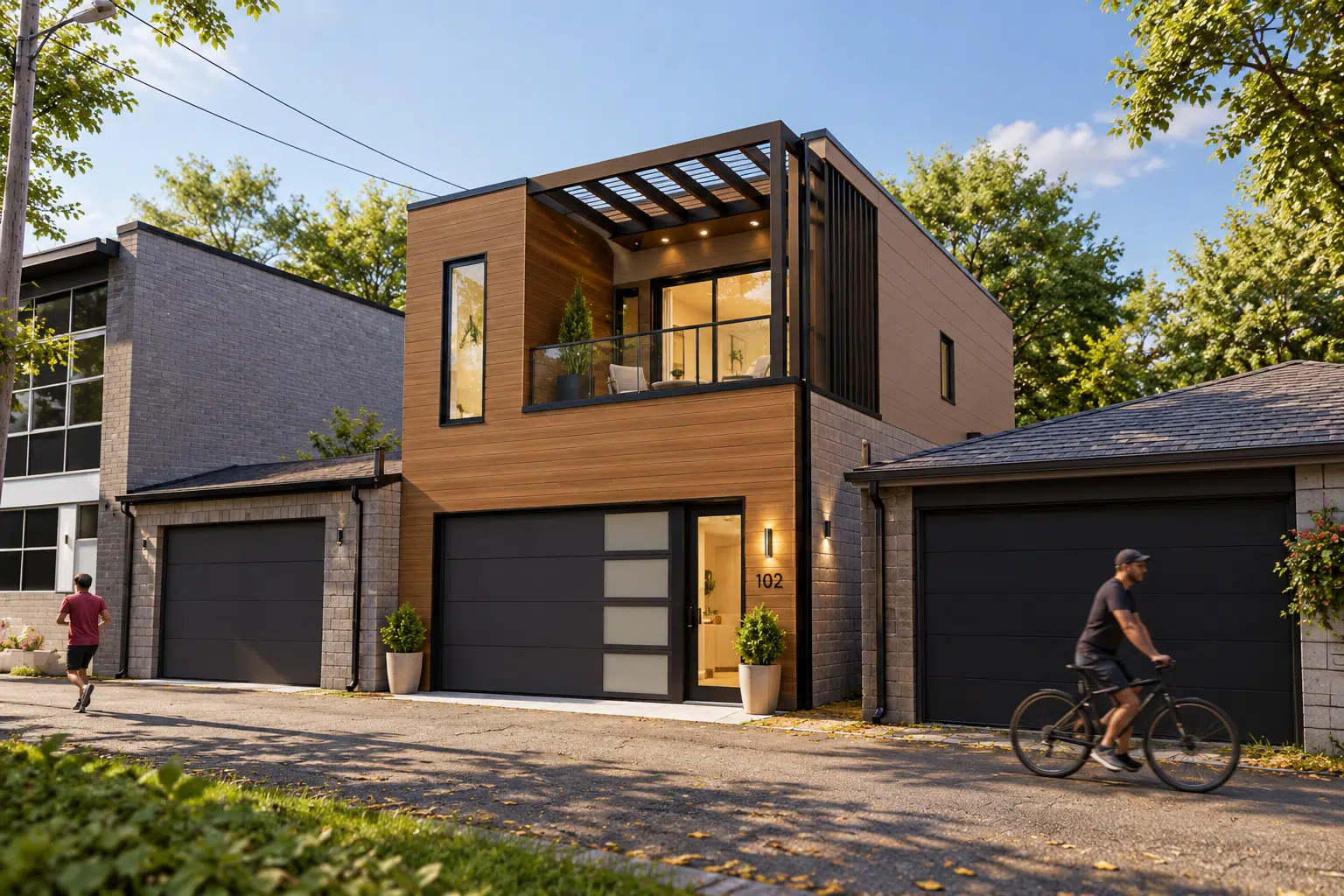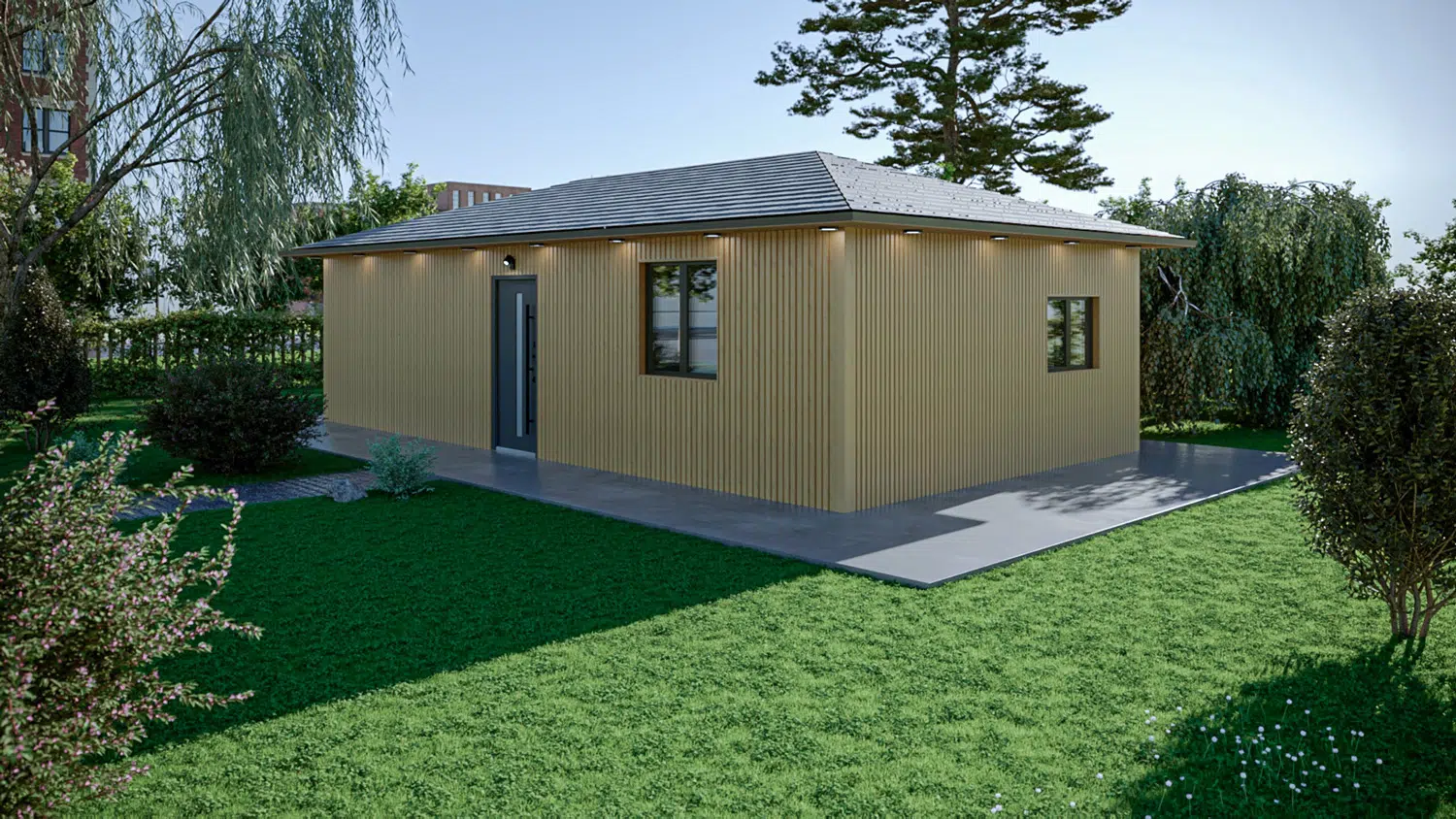
Garden suite insurance usually means adding the suite to your existing home policy, then adjusting the coverage for who lives in it. A suite for a family member is often a simple endorsement, while a suite rented to a tenant needs landlord coverage. As a garden suite builder, we tell clients to call their insurer before construction starts, whether they plan a family suite, a laneway suite or a unit for rental income.
The table below shows how coverage typically changes depending on who will live in the suite.
| Who lives in the suite | What your policy needs | Who insures their belongings | Watch out for |
|---|---|---|---|
| Nobody yet (under construction) | Course of construction coverage or written approval from your insurer | Not applicable | A standard policy may exclude new buildings under construction |
| Your parent or adult child | Suite listed on your homeowner policy at full replacement cost | Often covered under your policy, check if they are listed | Detached structure limits that are too low |
| A long-term tenant | Landlord or rental endorsement with liability and loss of rent | The tenant, through tenant insurance | Not telling the insurer about the rental |
| Short-term guests | A specific short-term rental endorsement or policy | Guests | Most home policies exclude short-term rentals |
| Empty between occupants | Vacancy permission from your insurer | Not applicable | Water damage claims after long vacancies |
Does home insurance cover a garden suite
Most Ontario homeowner policies include some coverage for detached structures, such as a garage or shed. That coverage is often a fixed percentage of the main dwelling limit, commonly around 10%. On a house insured for $800,000, that would mean about $80,000 for every detached building on the lot combined, which is far less than it costs to rebuild a finished garden suite.
The fix is to list the suite on the policy as a dwelling, or as a separately rated building, with its own replacement cost limit. Your insurer will want the floor area, the construction type, the heating system and the year built. Ask for guaranteed or extended replacement cost on the suite, so a total loss is rebuilt to the same standard even if construction prices rise. Some owners buy a separate policy for the suite instead. That gives clear limits, but it means two premiums and two deductibles.

Expect the premium to rise once the suite is added, because the insurer is now covering a second building with its own kitchen, bathroom and heating. The size of the increase depends on the suite’s replacement cost, its construction, the heating system and the distance to the nearest fire hydrant. A suite built to current code, with a heat pump and interconnected smoke alarms, usually rates better than an older converted structure.
Garden suite insurance during construction
Tell your insurer before the first shovel goes in. A building under construction carries risks a normal home policy may not cover, such as theft of materials, fire on site and storm damage to an unfinished structure. Depending on the insurer, you may need course of construction coverage, sometimes called builder’s risk, or a written endorsement on your existing policy.
Your contractor should carry its own commercial general liability insurance and WSIB coverage for its workers. Ask for both certificates before the contract is signed, and ask to be named as an additional insured on the liability policy. Clarify in the contract who insures materials delivered to the site but not yet installed, because that gap is where many disputes start.
If you are refinancing or taking a construction loan to pay for the suite, your lender will also ask for proof of insurance before it releases funds. Have your broker send the lender a binder that shows the suite under construction and, later, the finished suite at its full replacement cost. Delays here can hold up a draw, and with it the builder’s schedule.
Insuring a garden suite you rent to a tenant
Once a tenant moves in, you are a landlord, and your policy needs to say so. A landlord or rental endorsement typically covers the building, your liability if a tenant or visitor is injured, and loss of rental income if an insured event makes the suite unlivable. Not disclosing a rental is one of the fastest ways to have a claim denied.
Tenant insurance covers the tenant’s belongings and their own liability. The Ontario Standard Lease allows you to require it, so include that requirement and ask for proof each year. It protects you too: if a tenant’s cooking fire damages the suite, their liability coverage can respond before your own policy does.
Short-term rentals are a different category. In Toronto, short-term rentals are only allowed in the host’s principal residence, and most insurers exclude them from standard and landlord policies. If you plan to use the suite for guests, get the coverage confirmed in writing first.

Family occupants need attention too. If an adult child or a parent lives in the suite, confirm that they are named on your policy or covered as household members, and that their belongings and liability are included. Garden suite insurance for a relative is usually cheaper than landlord coverage, but only if the insurer knows who is living there.
Endorsements Toronto owners should consider
A few add-ons matter more for a backyard suite than for the main house. Sewer backup coverage is worth asking about because the suite usually drains through a new connection to the house’s sewer line. Overland water coverage helps on lots that slope toward the suite. Service line coverage can pay for repairs to the buried water, sewer and electrical lines that run across your yard to the suite, which are expensive to dig up and replace. Ask your broker to quote each one separately, so you can see what every endorsement adds to the premium and choose the ones that match your lot.
Garden suite insurance is rarely complicated, but it has to be arranged before construction and updated whenever the occupant changes. Call your insurer with the drawings and the expected occupancy, and get the changes in writing. If you would like a list of the suite details your insurer will ask for, book a free consultation and we will prepare it with your design.